
The Galae Method
Inner Alliance
I have developed a method based primarily on two complementary approaches: hypnosis and IFS (Internal Family Systems).

IFS : Internal Family Systems
IFS is a psychotherapy model developed in the United States by Dr. Richard Schwartz, whose effectiveness is supported by research.
It offers a compassionate way to understand our inner life. Rather than seeing certain aspects of ourselves as pathologies or problems to be fixed, it invites us to listen to them and understand their role. It considers that the psyche is naturally composed of different “parts,” somewhat like members of an inner family.
Each of these parts has its own emotions, intentions and history. Some parts carry wounds, others protect us, and others organize our day-to-day functioning.
By supporting the brain’s neuroplasticity and restoring harmony between these parts, this innovative psychotherapeutic approach can help heal deep wounds and rebuild self-confidence. It can bring remarkable results by facilitating connection with our unconscious resources and allowing access to the inner child.
Hypnosis
Hypnosis allows us to access an expanded state of consciousness in which attention turns more toward the inner world. Sensations, images, emotions or memories can then emerge more fluidly, beyond the usual filters of the mind, while remaining within a safe framework.
It is a natural state we all experience several times a day, for example when we are absorbed in a film, or when we drive while thinking about something else.
I use a gentle, respectful therapeutic hypnosis in which the person remains conscious throughout the session. Contrary to common misconceptions, there is no loss of control. This is not stage hypnosis. At any time, it is possible to interrupt what is happening, ask questions, or return to a more ordinary state of consciousness.

The Galae Method: Inner Alliance

In my practice, hypnosis facilitates access to the inner world and bodily sensations, while IFS provides a precise and structured framework for dialoguing with the different parts that arise, and accompanying them in their transformation.
Thus, through my experience, I have developed an original and specific way of combining these two approaches. I have adapted IFS so that it can unfold fully within the hypnotic state, allowing more direct and fluid access to inner experience and making the dialogue with parts more natural and deeper.
From this combination was born what I now call the Galae Method of Inner Alliance: hypnosis opens the door to unconscious experience, and IFS makes it possible to navigate it with clarity, respect and safety. Experience has shown me how this original method can help lift certain blocks and access what is happening more deeply within the person. Where each of these two approaches can sometimes reach its limits when used alone, their meeting creates a particularly powerful workspace. It allows the inner world to be explored with a level of subtlety and depth that is rarely accessible otherwise, and supports transformation in a way that is both gentle and lasting.
But the aim is not limited to resolving a specific difficulty. The work also seeks to establish a genuine dialogue with the unconscious and with the different parts of the self. Little by little, a more conscious and stable inner relationship takes shape, until it becomes a true Alliance.
When this dialogue becomes established, the unconscious is no longer a dark or unpredictable territory: it becomes a living and infinite resource on which the person can learn to rely, far beyond the sessions. This inner alliance between the unconscious and the self continues to unfold in daily life.
Inner Alliance: beyond therapy, a daily resource

The work does not stop when the session ends.
Throughout the process, you gradually learn to dialogue regularly with your unconscious as with an inner ally. You gradually learn to recognize what is happening inside you, to listen to your reactions differently, and to enter into relationship with the parts of yourself that are seeking to be heard.
In daily life, when an emotion returns, when pain appears, when relational tension arises, or when you have a difficult decision to make, it becomes possible to pause for a moment, turn inward, and simply ask your unconscious:
“What is happening inside me? What do I need right now?”
This inner alliance profoundly changes the way difficulties are experienced. You are no longer alone with what you are going through.
Your unconscious can become a support: it can help you listen to what is showing up, soothe what can be soothed, or show that a subject deserves to be explored more deeply in a next session.
The goal is not to solve everything by yourself. It is to learn how to create a more living connection with your inner world, so you no longer feel alone with your emotions, your pain or your blocks.
Over time, this inner alliance becomes a stable and benevolent presence: a gentle strength, available in daily life, continuing to accompany you far beyond the sessions.
Traditional Chinese Medicine
Alongside this work centered on the inner world, I also offer specific consultations in Chinese medicine:
- acupuncture;
- Chinese herbal medicine;
- dietary guidance based on the Chinese tradition.
Chinese medicine has been an integral part of my path for more than twenty years. It is an essential foundation in my understanding of the link between emotions, the unconscious and bodily manifestations.
In some cases, its contribution is especially valuable, particularly:
- to support weight loss and eating disorders;
- for insomnia and sleep disorders;
- to support the body during periods of fatigue, stress or burn-out.
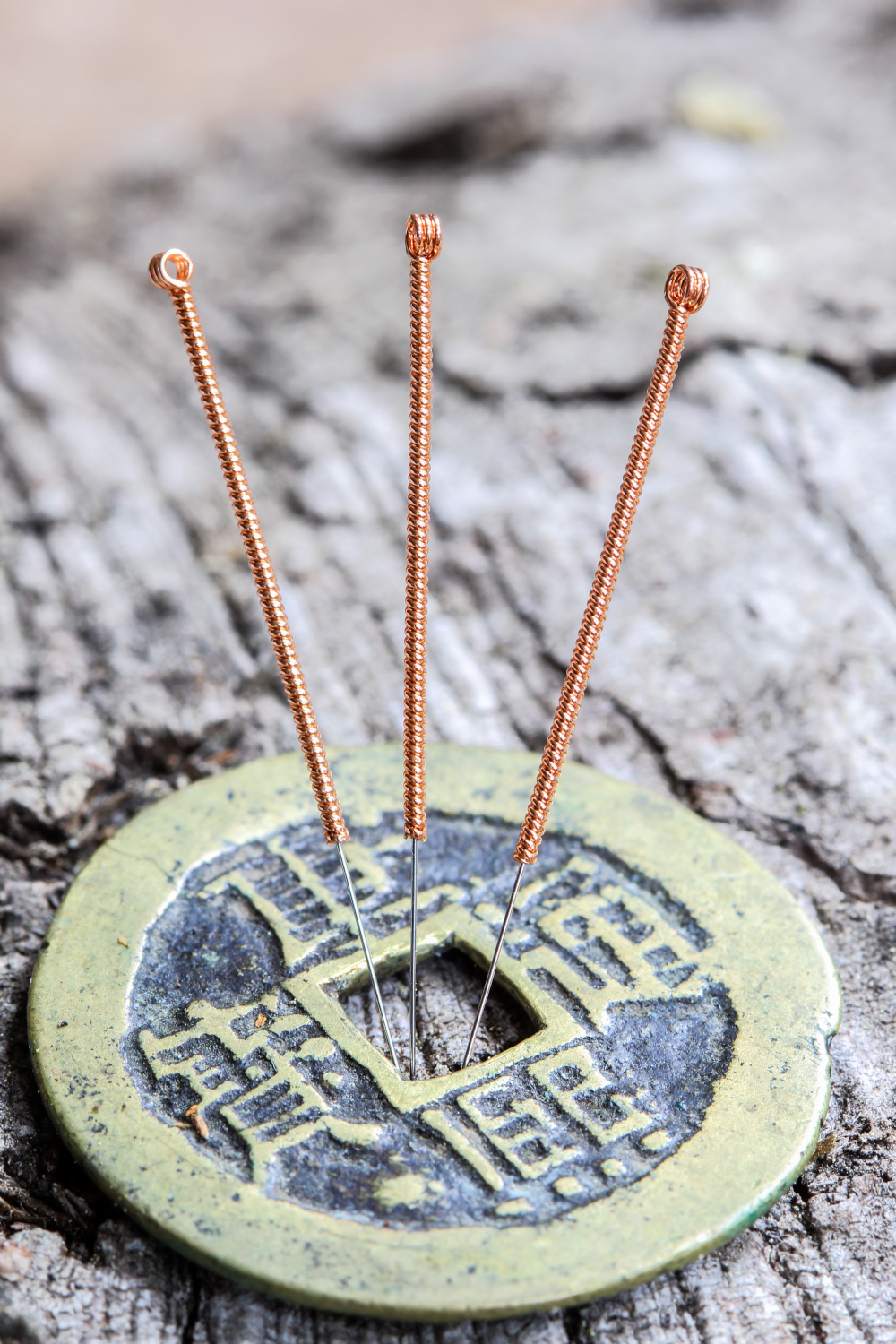
These Chinese medicine consultations can be offered independently, for people seeking support only within this framework, or as a complement to the work carried out with hypnosis and IFS, when this is relevant and clearly defined together beforehand.
The aim always remains the same: to support the person in their search for balance, taking into account the body, the emotions and the inner experience.
Learn more about hypnosis
When people hear the word hypnosis, many first think of stage shows, television, or the strange idea of “losing control.” This image can be frightening. It creates the impression that a hypnotized person would no longer really be themselves, and could do or say things against their will.
Therapeutic hypnosis is very different.
It is a natural state of consciousness that we all know at times: when we are absorbed in a film, immersed in a book, lost in thought, or when we drive along a familiar route with the feeling of being “elsewhere,” while still remaining able to react.
In this state, attention turns more inward. The usual mind becomes somewhat less prominent, and it becomes easier to access sensations, images, emotions, memories or understandings that are not always available in the ordinary state of consciousness.
Hypnosis is therefore not sleep. Nor is it a loss of will. The person remains conscious, present, able to speak, move, ask a question or interrupt the session at any time.
Its history is ancient. In the eighteenth century, Mesmer was already interested in the link between the body, the mind and phenomena of suggestion. In the nineteenth century, James Braid introduced the word “hypnosis” and began studying it as a particular state of attention. In France, physicians such as Charcot and later Bernheim helped bring hypnosis into the medical and psychological fields.
Later, in the twentieth century, Milton Erickson profoundly transformed the practice of hypnosis and gave it its modern form. He developed a more flexible, respectful approach, centered on the person, their story, their images, their words and their own resources.
Today, hypnosis is used in many areas: stress, anxiety, pain, phobias, emotional blocks, preparation for certain medical procedures, and sometimes even in medical settings, as a complement to anesthesia. During a therapeutic hypnosis session, the aim is not to make you do something or to impose ideas on you. It is rather to accompany you toward a calmer and more available inner state, in which what needs to be heard can emerge more naturally.
When we try to understand our difficulties only with the mind, we sometimes remain on the surface. We know something is not right, and we may already have analyzed a great deal, but an emotion, a pain, a fear or a block continues to be there.
Hypnosis then makes it possible to move closer to the inner experience. It opens a space in which the body, the emotions and the unconscious can begin to dialogue differently. It is not about control, but about dialogue. Insights, relief, reparative images or a deeper understanding of what is happening within oneself can then emerge.
Therapeutic hypnosis is therefore not an external magic. It is a way of accessing your own inner resources, within a safe framework, so that what was frozen, blocked or painful can begin to transform. In my practice, hypnosis is always gentle, progressive and respectful. You remain an active participant in what happens. Nothing is forced. Nothing is torn away. We move forward from what your inner world is ready to show, at your own pace.
IFS: better understanding what is happening inside you

IFS, or Internal Family Systems, is an approach developed in the United States by Dr. Richard Schwartz. It offers a simple and deeply compassionate way to understand our inner world.
The central idea is that we are not made of one single block. Different parts live within us: some want to move forward, others are afraid; some control, others protect themselves; some still carry old wounds. This can explain why we sometimes feel internally divided: one part of us wants to change, while another resists; one part wants to trust, while another is wary; one part wants to be free, while another is afraid of suffering again.
In IFS, no part is considered bad. Even reactions that seem to block us, such as control, avoidance, anger, mistrust, perfectionism, compulsions or the need to master everything, are often attempts at protection. These parts seek to prevent a deeper pain from waking up.
Behind these protections, there are sometimes more vulnerable parts, called exiles, often wounded by old or significant events: fear of abandonment, shame, rejection, sadness, the feeling of not being loved, not being good enough, or not being safe.
IFS work consists in gently restoring dialogue between these different parts of the self. It is not about forcing, rushing or eliminating a part. On the contrary, protective parts are listened to and respected. We first seek to understand their role, what they have tried to prevent, and what they may have carried for years.
Little by little, when these parts feel recognized and safe, they can relax. It then becomes possible to approach more gently what has been wounded, without reliving things in a brutal way.
At the center of this work is a calmer, clearer and more compassionate inner presence. IFS calls it the Self. It is this deep part of us that can listen without judging, welcome without forcing, and help the different parts find their rightful place again.
IFS therefore makes it possible to move from an inner world in conflict to a more peaceful relationship with oneself.
The aim is not to get rid of who we are. We learn to understand ourselves better, to listen to what is suffering, to reassure what is protecting, and gradually to recover a form of inner harmony.